
Japan has long been one of the most fascinating destinations on Earth — and 2026 is shaping up to be one of the best years yet to visit. Whether it’s your first trip or your fifth, this Japan travel guide for 2026 covers everything you need: top cities, regional gems, budgeting tips, cultural etiquette, and practical logistics that will help you travel smarter and deeper.
From the neon-lit streets of Tokyo to the tranquil bamboo groves of Kyoto, from ancient temples to futuristic technology, Japan rewards every type of traveler. Let’s get into it.
Why Visit Japan in 2026?
This Japan travel guide for 2026 starts with a simple answer to that question: Japan is more accessible than ever.
The country has fully reopened to international tourism, visa-on-arrival is available for travelers from dozens of countries, and Japan’s infrastructure — already world-class — continues to improve. The 2025 Osaka Expo left behind upgraded transit links in the Kansai region that benefit travelers through 2026 and beyond. Meanwhile, the yen remains relatively favorable for visitors from North America, Europe, and Australia, making Japan more affordable than its reputation suggests.
Add to that a culture of extraordinary hospitality, legendary cleanliness, and a food scene that rivals anywhere on the planet, and you have a destination that earns its place at the top of every serious traveler’s bucket list.
Best Time to Visit Japan in 2026
Timing your trip well is one of the most important decisions in any Japan travel guide for 2026. Japan has four distinct seasons, each offering a completely different travel experience.
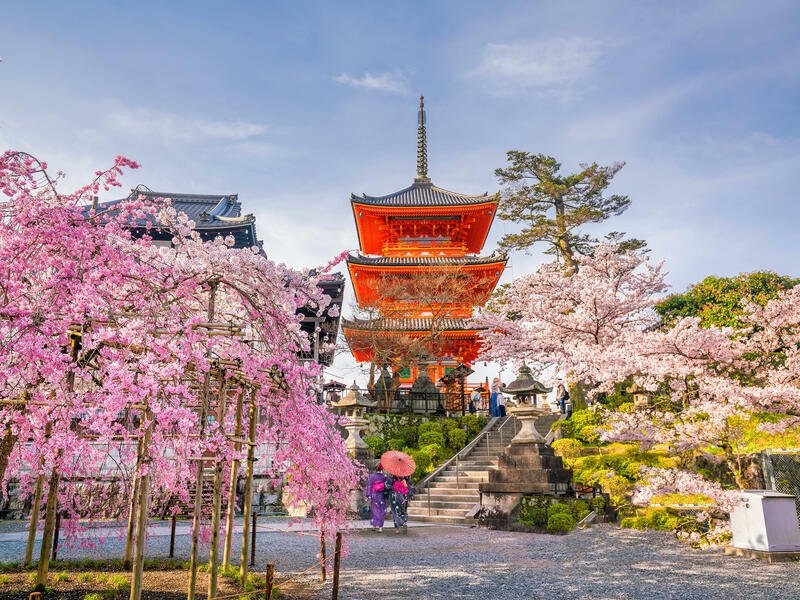
Spring (March–May) is peak cherry blossom season — sakura viewing draws millions of visitors each year. If you’re planning to visit during this window, book flights and accommodation at least 4–6 months in advance. Late March to mid-April is the sweet spot.
Autumn (September–November) rivals spring for beauty. The koyo (fall foliage) season transforms mountains and temple gardens into vivid shades of red, orange, and gold. Crowds are smaller than spring and the weather is crisp and comfortable.
Summer (June–August) is hot, humid, and busy with domestic tourists during the Obon holiday. That said, Japan’s summer festivals (matsuri) are spectacular — fireworks, yukata-clad crowds, and street food stalls make for unforgettable evenings.
Winter (December–February) is ideal for skiing in Hokkaido and Nagano, enjoying hot springs (onsen), and experiencing New Year celebrations. Crowds are thinner outside holiday periods, and prices dip noticeably.
Top Destinations Covered in This Japan Travel Guide for 2026
Tokyo — The City That Has Everything
No Japan travel guide for 2026 would be complete without leading with Tokyo. Japan’s capital is a city of endless neighborhoods, each with its own personality.
Shibuya and Shinjuku deliver the famous urban buzz — towering screens, packed crossings, and nightlife that runs until dawn. Harajuku offers fashion subcultures and the serene Meiji Shrine. Asakusa is old Tokyo at its most atmospheric, with the iconic Senso-ji Temple and traditional craft shops lining Nakamise Street.
Food-wise, Tokyo has more Michelin-starred restaurants than any other city in the world — but you’ll eat just as well at a $10 ramen counter or a standing sushi bar in the Tsukiji outer market.
Must-do in Tokyo: Day trip to Nikko or Kamakura, teamLab digital art museums, sumo tournament (check seasonal schedules), robot restaurants, and the Tokyo Skytree for panoramic views.
Kyoto — Japan’s Cultural Soul
Kyoto is the heart of traditional Japan and the city most travelers picture when they imagine the country. As this Japan travel guide for 2026 highlights, Kyoto rewards slow, deliberate exploration.
Fushimi Inari Shrine — with its thousands of vermillion torii gates winding up a forested mountain — is best visited at dawn before the crowds arrive. The Arashiyama bamboo grove, Kinkaku-ji (the Golden Pavilion), Gion district with its geisha culture, and Nishiki Market are all essential stops.
Kyoto also serves as a base for day trips to Nara (home to free-roaming deer and the enormous Todai-ji Temple) and Osaka (street food capital of Japan).
Insider tip: Stay in a traditional ryokan (Japanese inn) for at least one night. The kaiseki dinner, tatami floors, and morning onsen experience are quintessentially Japanese.
Osaka — Where Japan Lets Its Hair Down
If Tokyo is Japan’s nerve center and Kyoto its spiritual home, Osaka is its beating, food-loving heart. Locals here are famously gregarious, and the city’s unofficial motto — kuidaore (“eat until you drop”) — tells you everything.
Dotonbori is the neon-soaked entertainment district where you’ll find takoyaki (octopus balls), okonomiyaki (savory pancakes), and kushikatsu (deep-fried skewers) at every turn. Osaka Castle is a must-visit, and the Shinsekai neighborhood offers a nostalgic, retro slice of old Japan.
Hiroshima and Miyajima — History and Serenity
Any comprehensive Japan travel guide for 2026 must include Hiroshima. The Peace Memorial Park and Museum offer one of the most moving and important visitor experiences in the world. The city itself, rebuilt from the ground up, is vibrant, modern, and deeply welcoming.
A short ferry ride away, Miyajima Island is home to the floating torii gate of Itsukushima Shrine — one of Japan’s most iconic images and a UNESCO World Heritage Site.
Hokkaido — Japan’s Wild North
For travelers seeking nature, space, and adventure, Hokkaido belongs in every Japan travel guide for 2026. Japan’s northernmost main island is known for its national parks, ski resorts (Niseko is world-famous), lavender fields in Furano, and the extraordinary seafood of Sapporo and Hakodate.
In winter, the Sapporo Snow Festival draws enormous crowds, while the drift ice of the Sea of Okhotsk near Abashiri is a bucket-list natural phenomenon.
Budgeting for Japan in 2026
One of the most common misconceptions addressed in any Japan travel guide for 2026 is that Japan is prohibitively expensive. It isn’t — if you know how to travel smart.
Budget traveler: $60–$80/day (hostels, convenience store meals, local transport) Mid-range traveler: $120–$180/day (business hotels, restaurant dining, day trips) Luxury traveler: $300+/day (ryokans, fine dining, private experiences)
Key money-saving tips:
- Get a Japan Rail Pass if you’re visiting multiple cities. It covers Shinkansen (bullet train) travel and pays for itself quickly.
- Eat at convenience stores. 7-Eleven, FamilyMart, and Lawson in Japan are genuinely excellent — onigiri, hot foods, and bento boxes are cheap and surprisingly good.
- Use IC cards (Suica or Pasmo) for local transit in every city — they’re fast, cheap, and work on buses, metro, and even some shops.
- Book accommodation early for cherry blossom and autumn foliage seasons — prices double and availability disappears fast.
Cultural Etiquette Every Traveler Should Know
This Japan travel guide for 2026 would be incomplete without a word on cultural customs. Japan has a rich code of social behavior that visitors are expected to respect.
- Remove shoes when entering homes, many traditional restaurants, and some temples
- Don’t eat or drink while walking (except at festivals)
- Bow slightly when greeting — the deeper the bow, the more formal the respect
- Carry cash. Many smaller restaurants, shrines, and rural businesses are cash-only
- Keep your voice down on public transport — quiet carriages are a cultural norm, not just a rule
- Don’t tip. Tipping is considered rude in Japan — excellent service is simply the standard
Getting Around Japan
Japan’s public transport is legendary for its punctuality and coverage. The Shinkansen bullet train network connects major cities at speeds up to 320 km/h. Local metro systems in Tokyo, Osaka, and Kyoto are efficient and well-signposted in English.
For rural areas and smaller islands, local buses and regional rail lines fill the gaps. Car rental is worth considering for Hokkaido, the Noto Peninsula, and other rural regions where public transport is limited.
Hidden Gems Worth Adding to Your Japan 2026 Itinerary
Beyond the headline destinations, this Japan travel guide for 2026 recommends exploring:
- Kanazawa — Edo-period samurai districts, Kenroku-en garden, and excellent seafood without Tokyo’s crowds
- Yakushima Island — Ancient cedar forests that inspired Studio Ghibli’s Princess Mononoke
- Shirakawa-go — UNESCO-listed village of thatched gassho-zukuri farmhouses buried in mountain snow
- Matsumoto — One of Japan’s finest original castles, surrounded by the Japanese Alps
- Naoshima Island — A contemporary art island in the Seto Inland Sea with museums by Tadao Ando
These lesser-known spots offer authentic experiences and far fewer crowds — and they’re increasingly being discovered by savvy travelers who use this Japan travel guide for 2026 to go beyond the tourist trail.
Plan Your Japan Trip With Expert Help
Japan is endlessly rewarding — but planning the logistics, navigating visa requirements, building a realistic itinerary, and finding the hidden gems that don’t show up on generic travel sites takes real expertise.
That’s exactly what the team at Travel Escape Guide is here for.
Contact Travel Escape Guide today and let our travel specialists craft a personalized Japan itinerary built around your dates, interests, and budget. From cherry blossom timing to ryokan recommendations, we handle the details so you can focus on the experience.