
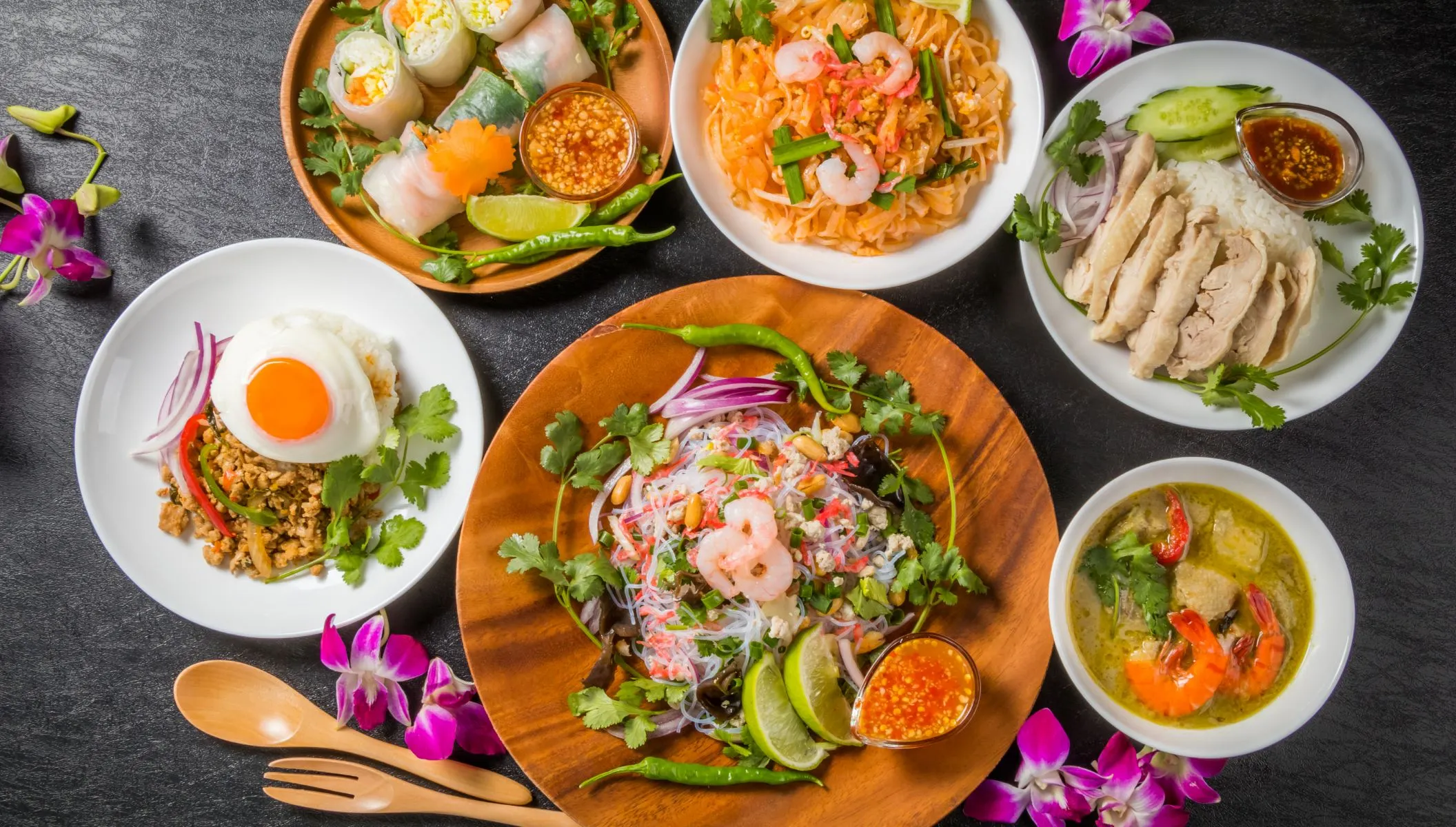
If there’s one reason to book a trip to Southeast Asia, it’s the food. The region is a paradise for food lovers — a kaleidoscope of bold flavors, vibrant markets, smoky woks, and recipes passed down for centuries. From steaming bowls of noodle soup eaten on plastic stools at dawn to skewered meats sizzling over charcoal at night markets, the best food to try in Southeast Asia is as diverse as the cultures that created it. Whether you’re a first-time visitor or a seasoned traveler, this guide breaks down the essential dishes and street food experiences you absolutely cannot miss.
Why Southeast Asian Cuisine Deserves Its Own Bucket List
Southeast Asia spans eleven countries — each with its own culinary identity, yet all connected by a shared love of fresh herbs, aromatic spices, and balanced contrasts of sweet, sour, salty, and spicy. Thai cuisine leans into fragrant coconut curries and lemongrass. Vietnamese food celebrates clean, herb-forward broths. Indonesian cooking buries its complexity in fermented pastes and grilled satay. Malaysian street food fuses Chinese, Indian, and Malay traditions into something entirely its own.
The best food to try in Southeast Asia isn’t found on resort menus — it’s found in the chaos of local markets, roadside stalls, and family-run warungs where recipes are measured by instinct, not grams.
Must-Try Street Food in Southeast Asia
1. Pad Thai (Thailand)
Thailand’s most iconic export, pad thai is stir-fried rice noodles cooked with eggs, bean sprouts, green onions, and your choice of shrimp, chicken, or tofu — all tossed in a tamarind-based sauce and finished with crushed peanuts and a wedge of lime. The best versions are made in a screaming-hot wok over an open flame, creating the slightly charred, smoky depth known as wok hei. Bangkok’s street corners are lined with vendors who have been perfecting this dish for decades.
Where to eat it: Thip Samai in Bangkok is legendary — lines form before it even opens.
2. Pho (Vietnam)
Pho is Vietnam’s national soul food — a slow-simmered bone broth ladled over silky rice noodles and topped with thin slices of beef or chicken, fresh herbs, lime, and chili. What makes it transcendent is the broth: hours of simmering with charred ginger, star anise, cinnamon, and cloves give it a depth that feels almost meditative. Pho bo (beef) from Hanoi and pho ga (chicken) from Hoi An are two regional interpretations worth seeking out separately.
3. Nasi Lemak (Malaysia)
Malaysia’s unofficial national dish, nasi lemak, is rice cooked in coconut milk and pandan leaves, served with fried anchovies, boiled egg, cucumber slices, roasted peanuts, and a generous scoop of sambal — a chili paste that ranges from mildly spicy to eye-watering. Traditionally a breakfast dish, it’s now enjoyed at any hour. You’ll find it wrapped in banana leaves at roadside stalls across Kuala Lumpur and Penang.
4. Bun Cha (Vietnam)
If pho is Vietnam’s most recognized dish internationally, bun cha is the one locals love most. Originating in Hanoi, it consists of grilled pork patties and belly slices served in a bowl of warm, slightly sweet and tangy dipping broth alongside a plate of vermicelli rice noodles and fresh herbs. It became globally famous when Anthony Bourdain shared a bowl with Barack Obama in 2016 — and it absolutely lives up to the hype.
5. Satay (Indonesia/Malaysia/Singapore)
Skewers of marinated meat — chicken, beef, lamb, or pork — grilled over charcoal and served with a rich peanut dipping sauce. Satay is one of the most universally adored street foods in the region. Indonesian satay leans sweeter with kecap manis; Malaysian versions come with ketupat (rice cakes) and cucumber. It’s the kind of food you eat standing up, pulling the tender meat directly off the skewer, with smoke still rising from the grill.
6. Laksa (Singapore/Malaysia)
A spicy coconut noodle soup that reflects Southeast Asia’s fusion history, laksa combines Chinese noodles with a rich Malay-spiced broth. Penang laksa (asam laksa) is tangy and fish-based; Singapore laksa uses a coconut-curry broth topped with prawns and cockles. Either version delivers an intense, layered bowl of flavor that exemplifies the complexity of regional cooking.
7. Banh Mi (Vietnam)
The beautiful result of French colonial influence on Vietnamese food culture — a crispy baguette stuffed with pâté, cold cuts or grilled pork, pickled daikon and carrots, fresh cilantro, cucumber, and chili. For less than a dollar in many Vietnamese cities, you get one of the most satisfying sandwiches in the world. Hoi An’s banh mi is widely considered the gold standard.
8. Som Tum (Thailand)
Green papaya salad is one of the most refreshing yet fiery dishes you’ll encounter. Shredded unripe papaya is pounded in a mortar with tomatoes, green beans, garlic, chilies, fish sauce, lime juice, and palm sugar. The result is simultaneously crunchy, sour, sweet, salty, and intensely spicy. It’s one of those dishes that completely resets your palate and leaves you immediately wanting more.
9. Rendang (Indonesia)
One of the world’s most complex slow-cooked dishes, rendang is beef (or occasionally chicken or lamb) simmered for hours in a spiced coconut milk paste until the liquid completely evaporates and the meat is dark, intensely flavored, and almost dry-fried in its own fat. The layered spice base includes lemongrass, galangal, kaffir lime leaf, turmeric, chili, and more. A single bite contains multitudes.
10. Mango Sticky Rice (Thailand)
No guide to the best food to try in Southeast Asia is complete without dessert. Thailand’s mango sticky rice — glutinous rice soaked in sweetened coconut milk, topped with ripe mango slices and a drizzle of more coconut sauce — is simple, seasonal, and deeply comforting. The contrast between the warm, slightly salty rice and the cold, sweet mango is an experience worth planning a trip around when mangoes are in peak season (March through June).
Tips for Eating Your Way Through the Region
Embrace the market. Night markets and morning wet markets are where the best food lives. Arrive hungry, order multiple small dishes, and share everything.
Follow the locals. If a stall has a line and plastic stools, it’s worth queuing for. The best food vendors rarely need signs — their reputation precedes them.
Learn a few words. “Aroy” (delicious) in Thai, “Ngon” in Vietnamese, “Sedap” in Malay — vendors genuinely appreciate the effort, and it often leads to extra generosity on the plate.
Manage spice expectations. Dishes labeled “not spicy” in Southeast Asia can still bring tears. Always ask for medium or mild if you’re new to the cuisine.
Eat where it’s cooked. Food from a stall you watch being made in front of you is not only safer — it’s almost always better than pre-made dishes sitting under a heat lamp.
Best Food to Try in Southeast Asia: A Regional Cheat Sheet
| Country | Signature Dish | Best City to Try It |
|---|---|---|
| Thailand | Pad Thai, Som Tum, Mango Sticky Rice | Bangkok, Chiang Mai |
| Vietnam | Pho, Bun Cha, Banh Mi | Hanoi, Hoi An |
| Malaysia | Nasi Lemak, Laksa | Penang, Kuala Lumpur |
| Indonesia | Rendang, Satay, Nasi Goreng | Bali, Yogyakarta |
| Singapore | Chicken Rice, Chili Crab, Laksa | Singapore hawker centres |
| Myanmar | Mohinga (fish noodle soup) | Yangon |
| Cambodia | Amok (steamed fish curry) | Siem Reap |
Final Thoughts
The best food to try in Southeast Asia isn’t locked behind restaurant doors or five-star hotel buffets — it’s alive on every street corner, in every hawker centre, and in every market stall run by someone who has been perfecting one dish for twenty years. This is food that tells the story of history, migration, religion, and geography all at once. Come hungry. Come curious. And come ready to eat more than you think you can.
The best food to try in Southeast Asia will surprise you, challenge you, and — more often than not — become the most vivid memory you carry home.
Ready to Start Your Southeast Asian Food Journey?
Planning a culinary trip through Southeast Asia is one of the most rewarding travel experiences you can have — but knowing where to go, what to eat, and how to navigate each destination makes all the difference.
Let us help you plan a food-first trip that hits every incredible stop.
👉 Contact the Travel Escape Guide team here and let’s start building your dream Southeast Asian itinerary — one unforgettable dish at a time.