
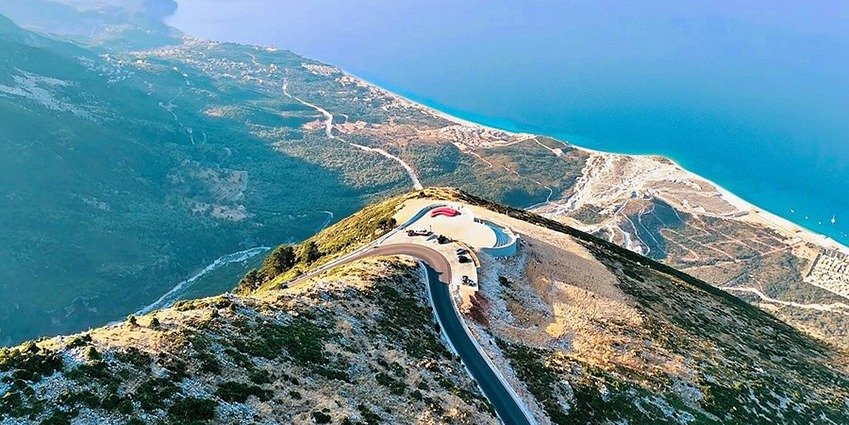
Europe’s last great undiscovered frontier isn’t in Scandinavia or Eastern Europe‘s popular capitals — it’s tucked deep in the Balkan highlands, nestled between towering peaks, turquoise rivers, and ancient olive groves. The hidden villages in Albania worth visiting offer something that mass tourism has all but erased from the rest of the continent: raw, unfiltered authenticity.
While Tirana’s café culture grows and Sarandë’s coastline fills with sun-seekers, a different Albania exists just a few hours inland — one where Ottoman stone towers still stand on hillsides, where locals wave at every passing stranger, and where a home-cooked meal of fergëse and raki costs almost nothing. This guide is your map to those places.
Why Albania? Albania has consistently ranked among Europe’s most underrated travel destinations. With no visa requirement for most nationalities, incredibly affordable prices, and a growing network of guesthouses and mountain trails, it’s easier than ever to explore its forgotten corners.
Why Seek Out the Hidden Villages of Albania?
Mass tourism is both a blessing and a curse. It funds preservation, but it also strips places of their soul. The hidden villages in Albania worth visiting have largely been spared this fate. Without the Instagram crowds and souvenir stands, they preserve something increasingly rare: a living culture.
In these mountain hamlets and river-valley settlements, the Kanun — the ancient Albanian code of honour — still shapes daily life. Traditional stone homes called kulla still stand as family strongholds. Shepherds still lead their flocks along the same trails their great-grandparents walked. And the concept of besa — keeping one’s word, offering hospitality without condition — is not a tourist performance. It is simply how things are done.
Beyond culture, the landscape is staggering. Albania sits at the convergence of the Dinaric Alps, the Albanian Alps (locally called the Bjeshkët e Namuna — “Accursed Mountains”), and the Ionian lowlands. Every mountain village carries a different climate, cuisine, and dialect. That geographic variety, compressed into a country roughly the size of Wales, makes it ideal for slow, exploratory travel.
Top Hidden Villages in Albania Worth Visiting
Here are the villages that reward travellers willing to stray off the main road. These are not tourist towns — they are real, living communities that welcome curious visitors with open arms.
1. Theth — The Crown Jewel of the Accursed Mountains
If there is one village that defines the phrase hidden villages in Albania worth visiting, it is Theth. Accessible for decades only by mountain track (and still best reached via a scenic 4×4 route or a dramatic hike over the Valbona Pass), Theth sits in a glacial valley of exceptional beauty.
The centrepiece is the 18th-century Lock-in Tower (Kulla e Ngujimit), a stone fortress where men under blood feud would take refuge for months, sometimes years. Surrounding it is a patchwork of wooden guesthouses, apple orchards, and a small Franciscan church. The Theth waterfall — a 30-minute hike — plunges into a vivid blue pool that looks rendered by CGI.
Traveller tip: The 4-hour hike from Valbona to Theth over the 1,800m Rrogam Pass is one of the finest day walks in the Balkans. Do it northbound (Valbona → Theth) to finish downhill.
2. Valbona — A River Valley Frozen in Time
The twin to Theth across the mountain ridge, Valbona is strung along the banks of the Valbona River — one of the clearest, coldest rivers in the Balkans. The village itself is more a loose cluster of guesthouses and farmsteads than a single settlement, framed dramatically by peaks that exceed 2,500 metres.
Valbona National Park, established in 1956, protects brown bears, wolves, lynx, and golden eagles that still roam these forests. It’s one of the few places in Europe where you might hear a wolf howl at dusk. The local guesthouses — almost all family-run — serve freshly caught trout, homemade cheese, and cornbread still cooked in a traditional sac iron pot.
3. Labovë e Kryqit — The Village of the Holy Cross
Standing on a ridge above the Drino Valley south of Gjirokastra, Labovë e Kryqit is one of the most spiritually significant hidden villages in Albania worth visiting. Its 9th-century Byzantine church, dedicated to the Holy Cross, houses an ancient relic said to contain a fragment of the True Cross — a claim that has drawn pilgrims for centuries.
The village itself is extraordinary: traditional stone houses with overhanging upper floors cascade down the hillside, their rooftops glinting with the same grey slate used here for over 500 years. Very few tourists ever make it here, which makes the experience all the more powerful.
4. Çorovodë & the Osumi Canyon Villages
The Osumi Canyon in central Albania is beginning to attract adventure travellers, but the small villages clinging to its rim — including the area around Çorovodë — remain almost entirely undiscovered. The canyon itself drops 80 metres in places, forming natural pools that are ideal for cliff jumping and wild swimming in summer.
The village communities here are among the friendliest in Albania. Ask a local elder about the canyon’s history and you may find yourself seated at a table before you can decline, being served coffee and preserves in a hospitality ritual that goes back generations.
5. Razëm — The Vanishing Village
Razëm, perched above Lake Shkodër in the northwest, is one of the most dramatically situated hidden villages in Albania worth visiting. Reachable only by a steep dirt track or by boat across the lake, this tiny community of farmers and fishermen lives largely as they have for generations.
In winter, the lake floods much of the surrounding lowland, turning Razëm into a near-island. In summer, the retreat of the water reveals wild orchids and rare wetland birds, including Dalmatian pelicans and pygmy cormorants. It’s one of the finest spots for birdwatching in the entire Balkans.
6. Lura — The Land of Glacial Lakes
Lura National Park, in the Dibra mountains of eastern Albania, shelters a chain of twelve glacial lakes scattered across alpine meadows at 1,000–2,000m elevation. The small villages on the park’s edge — particularly the hamlets around Lurë itself — see almost no foreign visitors despite offering some of the country’s most spectacular mountain scenery.
The local Dibran culture is distinct: a particular style of polyphonic singing, intricate embroidery on women’s traditional dress, and a cuisine centring heavily on lamb and wild mountain herbs. It’s an entirely different Albania from the Adriatic coast.
Best time to visit: Late June through September for wildflowers and dry trails. The lakes are frozen or snow-covered from November to April
7. Bënjë — The Thermal Springs Village
Bënjë is one of those hidden villages in Albania worth visiting that rewards visitors with more than scenery. Beside the village, the Lengarica River winds through a canyon spanned by an Ottoman stone bridge, beneath which natural thermal springs — reaching 37°C — bubble up from the riverbed.
Bathing in the thermal pools while the cold river rushes past, surrounded by forested canyon walls, with almost no other tourists in sight, is one of the more surreal and blissful experiences available in Europe. A few family guesthouses in Bënjë offer simple but comfortable accommodation and excellent home cooking.
8. Palasë — Ionian Cliffside Hamlet
On the Albanian Riviera, most visitors stop at Dhermi or Himara. Fewer venture to tiny Palasë, a cliff-edge hamlet above the most pristine stretch of the Ionian coastline. The beach below — accessible via a 20-minute scramble down a goat path — is one of the finest in the entire Mediterranean, all white pebbles and electric-blue water, typically shared with at most a handful of people.
The village itself is little more than a dozen old stone houses, an ancient olive press, and a small kafja. That is precisely the point.
Practical Tips for Visiting Hidden Villages in Albania
The hidden villages in Albania worth visiting are accessible with modest planning, but they do require a different mindset than typical European travel. Here’s what experienced Albania travellers recommend.
Getting Around
Albania’s mountain villages are not served by regular public transport. A rented car — ideally a 4×4 for the north — is the single best investment you can make. Furgon minibuses run between larger towns, and from there it’s often a taxi or a hike to the village itself. In the far north, it’s perfectly normal for the road to become a gravel track and then simply stop. That’s where the real Albania begins.
Where to Stay
Guesthouses (locally called bujtina) have proliferated across the mountain areas over the past decade, largely thanks to outdoor trail networks like the Peaks of the Balkans and the Via Dinarica. These are almost all family-run, and staying in them directly supports village economies. Booking is usually done via phone or a simple booking platform — and sometimes just by turning up.
When to Go
Late spring (May–June) and early autumn (September–October) are ideal for most hidden villages in Albania worth visiting. Summer (July–August) is beautiful but can be hot in the south and busy on the coast. Winter visits to the northern Alps are possible but require proper preparation — many roads close after heavy snowfall.
Budget
Albania remains one of the most affordable countries in Europe. A guesthouse bed with breakfast and dinner typically costs €20–35 per person. A restaurant meal rarely exceeds €8. Petrol is cheap, and park entry fees, where they exist, are minimal. Even with a rented 4×4, a two-week trip through the mountain villages is achievable for well under €1,000 per person.
Respecting Local Culture
The communities you’ll visit in the hidden villages in Albania worth visiting are real, living places, not open-air museums. Dress modestly when visiting religious sites. Ask before photographing people, especially women and elders. Accept offered hospitality — refusing food or coffee can cause genuine offence. Learn a few words of Albanian — even faleminderit (thank you) and mirëmëngjes (good morning) will earn you immediate goodwill.
The Future of Rural Albanian Tourism
Albania is changing fast. Infrastructure investment, EU candidate status, and a booming travel media presence mean that some villages that were utterly unknown five years ago are now drawing real visitor numbers. Theth, for instance, has seen guesthouse capacity triple in a decade.
That makes now the ideal time to visit the hidden villages in Albania worth visiting — before “hidden” becomes a marketing slogan rather than a description. The window for genuinely off-grid Albanian village travel is real, but it will not stay open indefinitely. Visit thoughtfully, spend locally, and leave these places as you found them: extraordinary.
The beauty of these communities isn’t just in their landscapes or their architecture. It’s in the people — in families who will invite a complete stranger in for coffee and conversation, who will walk you to the trailhead themselves, who will apologise that the guesthouse is “only” offering four courses tonight. That generosity of spirit, that besa, is the real reason these are among the most remarkable hidden villages in Albania worth visiting — anywhere in Europe.
Ready to Plan Your Albanian Village Adventure?
At Travel Escape Guide, we help curious travellers discover the world’s most extraordinary off-the-beaten-path destinations. From Albanian mountain trails to hidden coastal hamlets, our guides are written by travellers who have actually been there.