
When two of Europe’s most iconic countries go head-to-head, picking a winner isn’t easy. The Spain vs France debate is one travelers have wrestled with for decades — and in 2026, it’s more relevant than ever. Both nations offer world-class food, breathtaking landscapes, rich history, and unforgettable cities. But they deliver those experiences in very different ways.
This guide breaks down every major factor — budget, weather, cuisine, culture, nightlife, and more — so you can decide which destination truly fits your travel style.
Geography and Landscapes: A Tale of Two Terrains
Understanding the Spain vs France geography matchup starts with scale and variety.
Spain stretches across the Iberian Peninsula with extraordinary diversity — snowcapped Pyrenees in the north, sun-scorched Almería in the south, lush Galicia along the Atlantic coast, and the volcanic drama of the Canary Islands. Spain’s Mediterranean coastline is extensive, accessible, and far less commercialized in its lesser-known corners.
France matches that variety with its own lineup: the French Alps, Normandy’s rugged cliffs, Provence’s lavender-carpeted hills, the wine-soaked valleys of Bordeaux, and the glittering Côte d’Azur. In terms of sheer scenic diversity, both countries are world-class.
Edge: Draw — but Spain’s coastlines are generally less crowded and more affordable to access.
Climate: When Should You Visit Each Country?
In the Spain vs France weather debate, Spain wins for sunshine.
Southern Spain logs over 300 sunny days per year, making it a genuine winter escape destination. Summers in Madrid and Seville are intense — temperatures regularly exceed 35°C — but coastal regions and the north offer relief. Northern Spain (Galicia, the Basque Country) is greener, cooler, and rainier, almost reminiscent of Ireland.
France operates on four proper seasons. Winters in Paris can be grey and cold. The south — particularly the French Riviera and Provence — enjoys a pleasant Mediterranean climate, but summer crowds and prices peak sharply. Spring and autumn are France’s sweet spots.
Best time for Spain: October through May for the south; June through August for the north and coast. Best time for France: April–June and September–October for most regions.
Edge: Spain — for more year-round travel flexibility and warmer overall temperatures.
Cost Comparison: Spain vs France for Budget Travelers
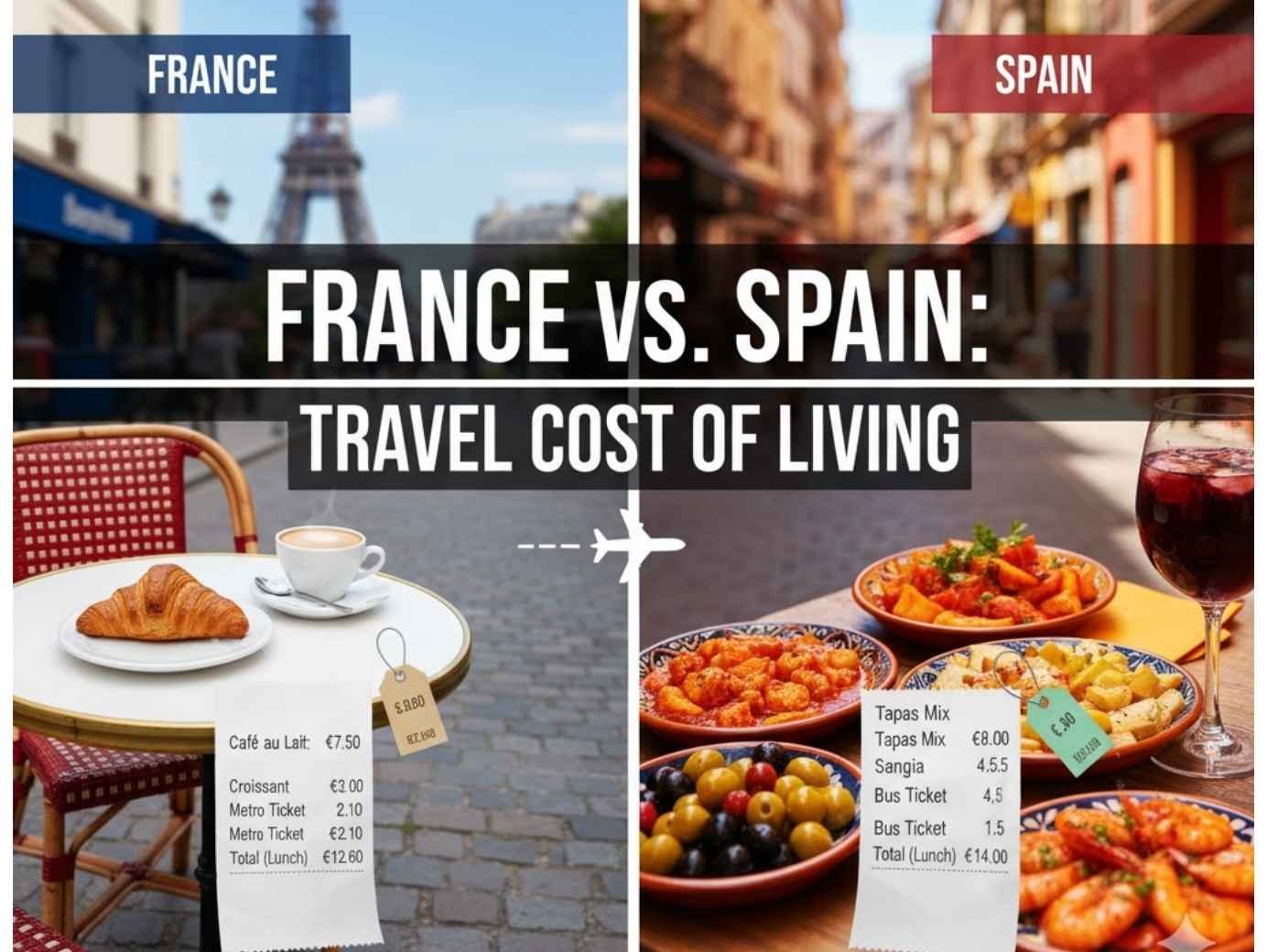
If your wallet has a say, the Spain vs France cost comparison tilts clearly in one direction.
Spain runs 30–40% cheaper than France across most spending categories. Accommodation, restaurant meals, and local transport all cost significantly less. A mid-range dinner in Barcelona or Seville typically runs €15–20 per person, while a comparable meal in Paris or Lyon will set you back €25–35 or more.
Daily Budget Breakdown: Spain vs France
| Expense | Spain (Per Day) | France (Per Day) |
|---|---|---|
| Budget Accommodation | €50–70 | €70–100 |
| Mid-Range Hotel | €100–150 | €150–220 |
| Restaurant Meal (Mid-Range) | €15–20 | €25–35 |
| Local Transport | €5–10 | €7–12 |
| Attraction Entry | €10–15 | €12–20 |
| Estimated Daily Total | €80–120 | €120–180 |
Spain’s high-speed AVE trains offer exceptional value for intercity travel, making it easy to see multiple cities without overspending. France’s TGV network is broader but pricier.
Edge: Spain — significant savings across all categories.
Cuisine: Spain vs France Food Culture
Food is where the Spain vs France rivalry gets truly personal.
Spanish food is built on honesty and quality. Tapas culture transforms eating into a social ritual — small plates shared across a table, with conversation flowing as freely as the wine. Regional identity runs deep: Valencia owns paella, the Basque Country invented pintxos, Galicia excels in seafood, and Andalusia perfected gazpacho. Lunch is Spain’s main event, typically served between 2–3 PM, with dinner rarely starting before 9 PM.
French cuisine is, in many ways, the global standard for culinary artistry. The structured multi-course meal — from amuse-bouche to digestif — reflects centuries of technique and refinement. France’s wine culture is unmatched in complexity, with Bordeaux, Burgundy, and Champagne classifications that take years to master properly.
The practical difference? You can eat extraordinarily well in Spain for €8–12 at a local bar. In France, a comparable experience easily costs double.
Edge: Spain for value; France for haute cuisine and technical mastery.
Major Cities: Where Does Each Country Shine?
The city comparison is perhaps the most vivid part of the Spain vs France debate.
Spain’s standout cities:
- Barcelona — where Gaudí’s surreal architecture meets a working Mediterranean beach city. Catalan identity, cosmopolitan energy, and a world-famous food scene collide in one place.
- Madrid — the cultural powerhouse. Home to the Prado, Reina Sofía, and some of Europe’s most electric nightlife.
- Seville — the soul of Andalusia. Flamenco, Moorish palaces, orange-tree-lined streets, and a pace of life that refuses to be rushed.
France’s standout cities:
- Paris — no city on earth carries the same weight of romance, art, and architectural beauty. The Louvre, Notre-Dame, Montmartre, and the Seine make it one of the world’s greatest urban experiences — but it commands premium prices.
- Lyon — France’s true gastronomic capital, often overlooked, with a historic old town and an exceptional restaurant scene.
- Nice — Riviera elegance with slightly more accessible pricing than Paris, plus a gorgeous coastline.
Edge: Draw — Spain wins on variety and value; France wins on single-destination impact (Paris).
Cultural Experiences: Passion vs Refinement
The cultural contrast in Spain vs France is one of the most compelling aspects of the comparison.
Spain vibrates with passionate energy. Flamenco isn’t just a dance — it’s an emotional language. Festivals like La Tomatina, Semana Santa in Seville, and San Fermín in Pamplona are raw, participatory, and unlike anything else in Europe. Spanish people are warm, expressive, and genuinely welcoming to strangers.
France radiates intellectual and artistic refinement. The Louvre alone could occupy a week. French culture rewards those who slow down — lingering over meals, debating ideas in cafés, absorbing the history embedded in every village square. Outside Paris, the French are considerably more welcoming than their capital’s reputation suggests.
Edge: Depends on your personality — Spain for spontaneous immersion; France for cultivated cultural depth.
Transportation Infrastructure
Both countries invest heavily in rail travel, but there are key differences in the Spain vs France transport matchup.
Spain’s AVE high-speed train network connects Madrid to Barcelona in 2.5 hours, Seville in 2.5 hours, and Valencia in under 2. The system is modern, punctual, and excellent value for intercity travel. For rural exploration, a rental car becomes essential — Spanish roads are well-maintained and toll costs are reasonable.
France’s TGV network is more extensive, reaching smaller cities and rural regions that Spain’s AVE doesn’t touch. This makes France slightly easier to explore comprehensively by rail alone. French regional trains, however, can be slower and more expensive for shorter routes.
Edge: France for rural rail coverage; Spain for urban high-speed value.
Language and Communication
Language rarely becomes a serious barrier in either country’s tourist areas, but there are notable differences in the Spain vs France visitor experience.
Spanish is phonetically consistent — what you see is largely what you say — which makes it easier for English speakers to attempt basic communication. Spanish locals are almost universally patient and encouraging with any effort, often switching comfortably to English when needed.
French pronunciation is notoriously tricky, and Parisians have a justified (if exaggerated) reputation for impatience with linguistic struggles. Venture outside Paris, however, and you’ll find far more warmth and appreciation for any attempt at the language.
Edge: Spain — more accessible language, more forgiving communication culture.
Nightlife and Evening Entertainment
In the Spain vs France nightlife comparison, Spain doesn’t just win — it dominates.
Spain’s nightlife is genuinely world-class. Ibiza remains the global benchmark for electronic music. Madrid’s club scene runs until 6 AM on weekends. Barcelona’s rooftop bars, jazz clubs, and beach parties operate across the full spectrum from sophisticated to raucous. The evening starts late — dinner at 10 PM, clubs opening at midnight — and the energy builds until sunrise.
French evenings trend toward sophistication: wine bars, theater, live jazz, and thoughtful restaurant experiences. French nightlife wraps earlier and feels less intense, which suits some travelers perfectly.
Edge: Spain — for energy, variety, and legendary late-night culture.
Shopping: Fashion, Crafts, and Markets
The Spain vs France shopping experience differs dramatically depending on what you’re after.
France dominates the luxury market. Paris’s Champs-Élysées and Avenue Montaigne host the world’s most prestigious fashion houses. The Marais district offers excellent vintage hunting. French markets — from Provençal village squares to Parisian covered halls — showcase extraordinary gourmet products: cheeses, charcuterie, wines, and truffles.
Spain counters with exceptional value in leather goods, handmade ceramics, and contemporary fashion. Global high-street giants Zara and Mango were born here, and their flagship Spanish stores carry the latest collections. Spanish markets tend to emphasize fresh local produce, seasonal ingredients, and regional crafts.
Edge: France for luxury; Spain for value and everyday fashion.
Safety and Practical Considerations
Both countries rank among the safest destinations in Europe, and this aspect of the Spain vs France comparison is largely a draw.
Spain sees higher rates of petty theft — particularly pickpocketing in Barcelona’s Gothic Quarter and Madrid’s tourist hotspots. Standard urban vigilance applies. France carries similar concerns in Paris (especially around the Eiffel Tower) and Marseille.
Healthcare is excellent in both countries. Emergency services in Spain are particularly efficient. Travel insurance remains essential for both destinations regardless.
Edge: Draw — both are safe; standard tourist-area awareness required in each.
Spain vs France for Different Types of Travelers
Couples
France edges ahead for romance — Paris, the Loire Valley châteaux, and Provence’s lavender fields create an atmosphere few destinations can match. Spain offers passionate alternatives: Seville’s intimate streets, Barcelona’s beach sunsets, and the Alhambra at dusk.
Families
Spain works better for most families — lower costs, warmer beaches, longer sunshine, and a relaxed dining culture that accommodates children easily. France offers stronger educational value for older children through historical sites and world-class museums.
Solo Travelers
Spain’s social hostel culture and communal tapas tradition make it naturally welcoming for solo explorers. France suits independent travelers who prefer self-directed cultural immersion.
Food Enthusiasts
France if budget isn’t the primary concern and technical culinary excellence is the goal. Spain if social dining culture, bold flavors, and extraordinary value define the ideal food experience.
Beach Lovers
Spain wins decisively — the Costa Brava, Balearic Islands, and Canary Islands offer warmer water, more sunshine, and far less crowding than the French Riviera at comparable price points.
2026 Travel Trends: What’s Changing
The Spain vs France landscape continues to evolve in 2026.
Spain is actively managing overtourism, particularly in Barcelona and Madrid. New regulations restrict short-term rentals in major cities, tightening accommodation availability in peak areas. Sustainable tourism initiatives are expanding across Andalusia and the Canary Islands.
France benefits from upgraded infrastructure following the Paris Olympics, with improved public transport links and expanded tourism capacity in secondary cities like Lyon, Nantes, and Strasbourg. Both countries are pushing eco-friendly travel options and responsible tourism frameworks.
Practical implication: Book accommodation earlier than you might expect for both destinations in 2026, especially for summer travel.
The Final Verdict: Spain vs France
Here’s the honest conclusion to the Spain vs France debate: there is no objectively wrong choice. Both countries deliver European travel experiences that genuinely rival anything the world has to offer.
Choose Spain if you want:
- Better overall value for money
- More sunshine and beach access year-round
- Vibrant social atmosphere and nightlife
- Bold, affordable food with deep regional character
- A warmer, more instantly welcoming culture
Choose France if you want:
- World-class art, museums, and architectural heritage
- Refined culinary experiences and unmatched wine culture
- Romantic ambiance — especially Paris and Provence
- Luxury shopping and high fashion
- Comprehensive rail exploration of diverse regions
The smartest answer? Visit both — on separate trips, with different mindsets. Spain rewards spontaneity and social energy. France rewards patience and cultural curiosity. Together, they represent the full spectrum of what European travel can be.
Pros and Cons: Spain vs France at a Glance
| Category | Spain ✅ | Spain ❌ | France ✅ | France ❌ |
|---|---|---|---|---|
| Cost | Significantly more affordable | Few drawbacks | Premium experiences | Expensive across the board |
| Weather | Warm, sunny, year-round appeal | Extreme summer heat inland | Distinct four seasons | Unpredictable, especially north |
| Food | Incredible value, social dining | Less technical refinement | Culinary artistry and depth | High restaurant costs |
| Culture | Warm, expressive, welcoming | Siesta hours disrupt planning | Rich artistic and intellectual heritage | Language barrier in Paris |
| Nightlife | World-famous, late-night energy | Exhausting if you need early starts | Sophisticated and curated | Earlier closing, lower energy |
| Beaches | Warmer, less crowded, better value | Limited near major inland cities | Beautiful Riviera coastline | Crowded, expensive, cooler water |
Frequently Asked Questions
Which is cheaper for tourists — Spain or France? Spain is considerably more affordable. Across accommodation, dining, and activities, expect to spend roughly 30–40% less in Spain than in France for comparable quality experiences.
Is Spain or France better for food lovers? France leads in haute cuisine and technical sophistication. Spain delivers extraordinary value, bold regional flavors, and a social dining culture that’s genuinely unique. Both offer world-class food — your preference depends on what “great food” means to you.
Which country has better weather for a vacation? Spain wins for warmth and sunshine, particularly in the south. France offers more seasonal variety, with excellent spring and autumn conditions in most regions.
Is it easier to travel in Spain or France without knowing the language? Spain is more accommodating for English speakers. Spanish is easier to pronounce, and locals are generally more patient with language attempts. France requires more preparation, particularly outside major tourist centers.
Which destination is better for families? Spain typically suits families better — lower costs, warmer beaches, more relaxed atmosphere, and family-friendly dining make it easier to travel with children. France excels for families with older children interested in history and culture.
Can I visit both Spain and France in one trip? Absolutely. The two countries share a border, and a combined itinerary works well — fly into Barcelona, travel overland to the French Riviera, then north to Paris. Two weeks minimum is recommended for doing both justice.